Why Cutedeer keeps soft clay and hard blocks on the same site
Cutedeer makes two kinds of toy that look like they belong in different aisles, and for a long time we shelved them that way ourselves. Then we watched how children actually move between them.
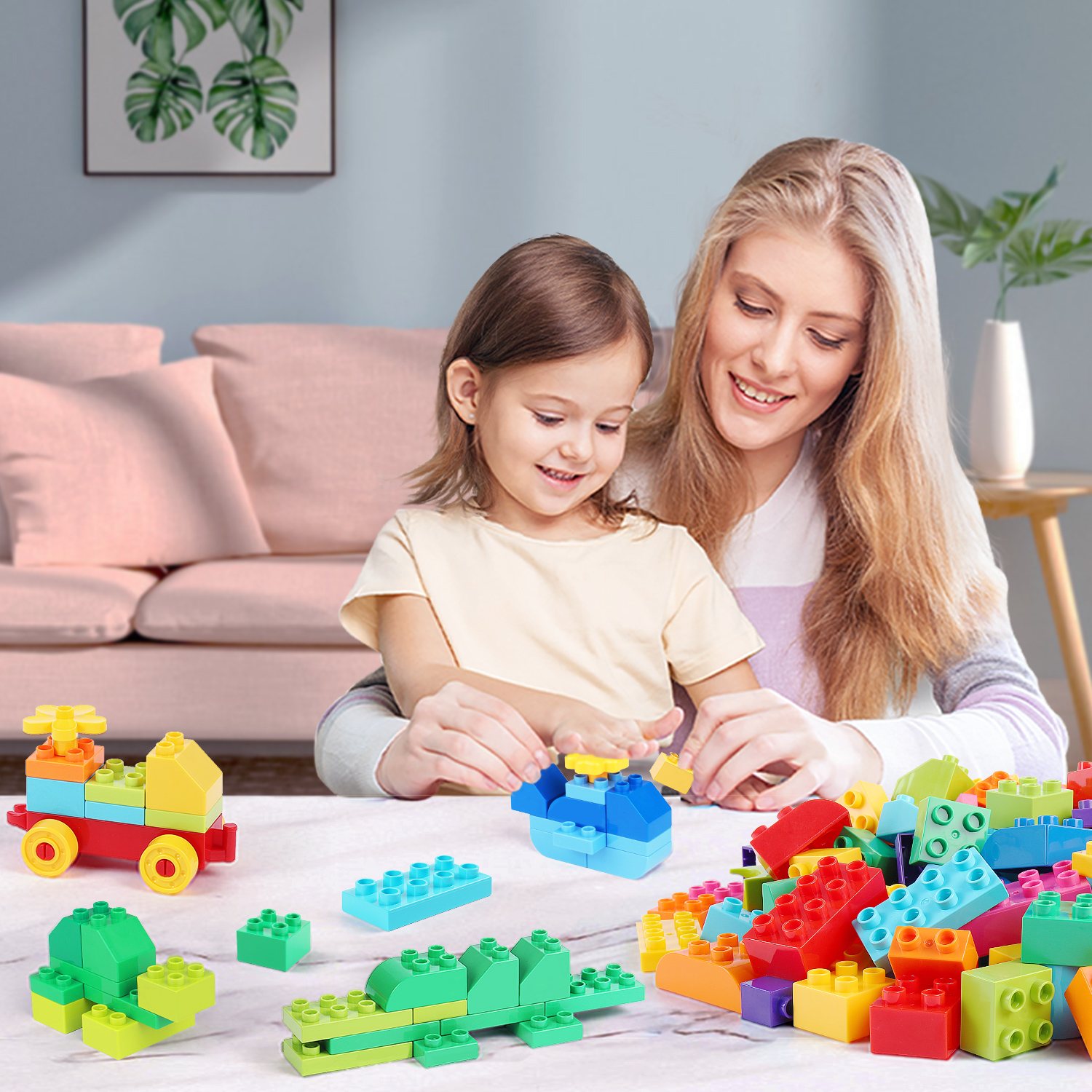
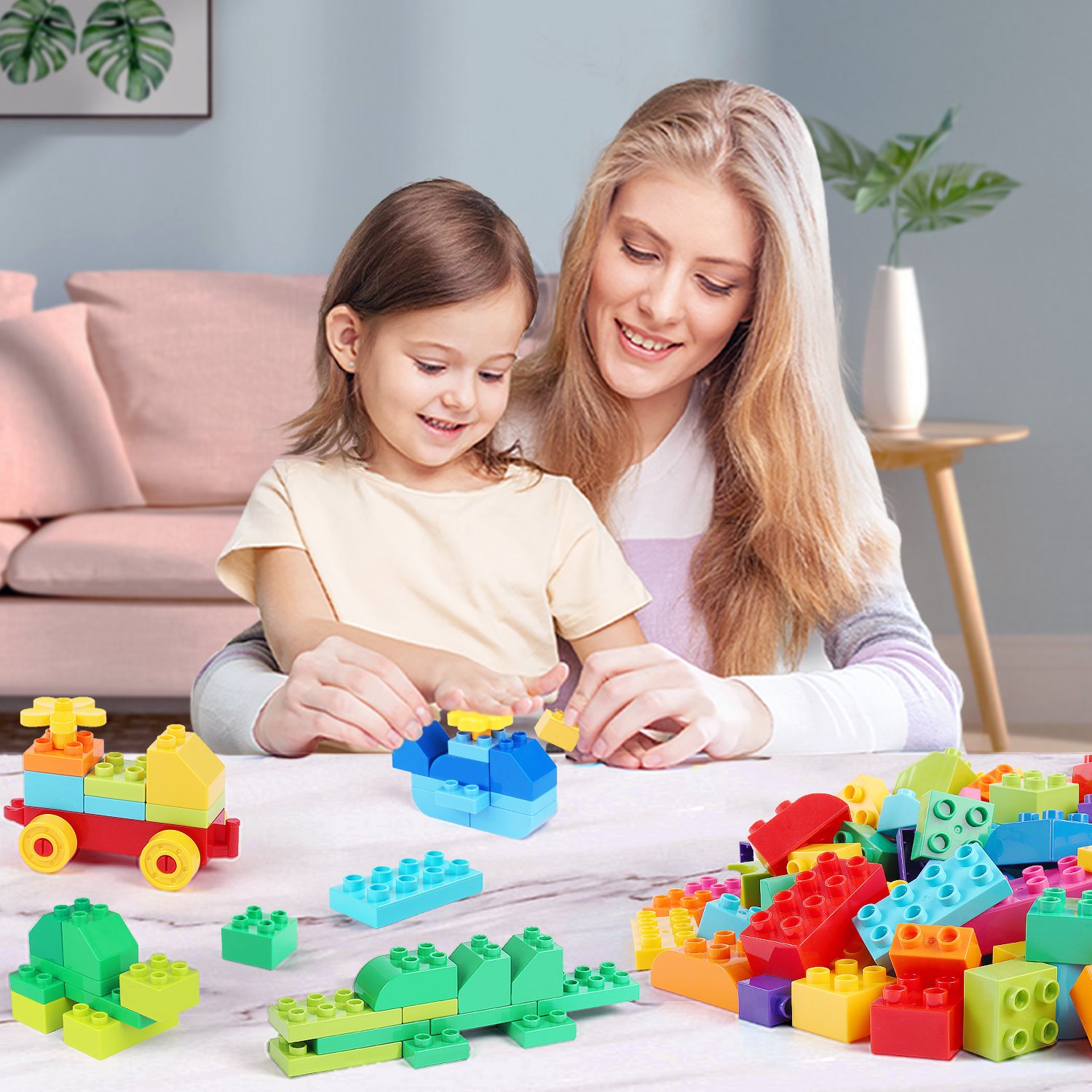
A child builds a garage out of blocks, then wants a car small enough to park in it, and the blocks have nothing that size. Soft modeling clay answers that question in about four minutes.
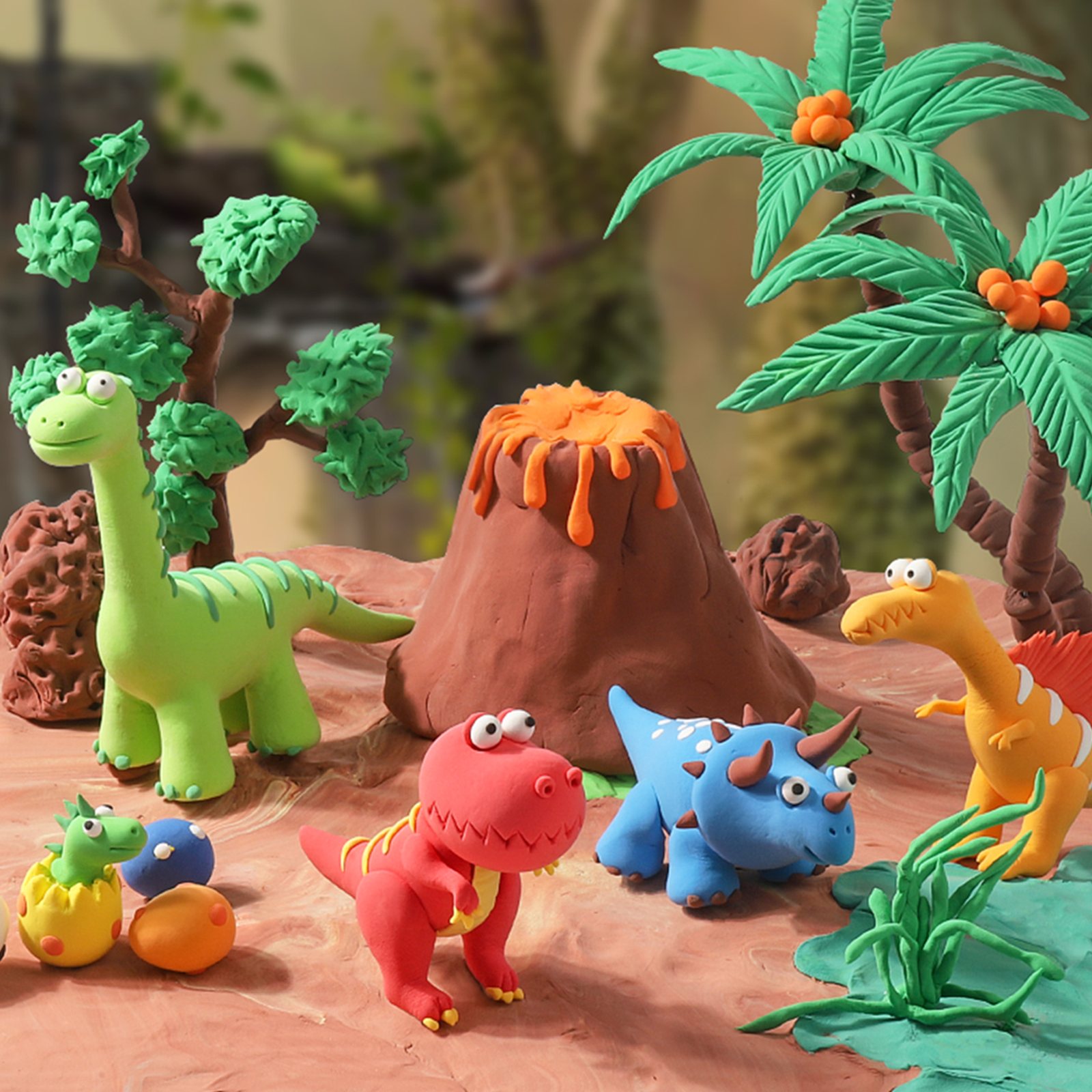
The reverse happens just as often. A clay dinosaur needs a cliff to stand on, and no amount of sculpting will make clay hold a wall that tall. Blocks give it that height in a minute.
So the range covers both ends of the same afternoon. The blocks give structure, scale and a surface that survives being knocked over; the clay gives detail, color and the small creature that lives inside the structure. Combine them and the garage gets a mechanic.
Families who buy one of ours tend to come back for the other within a season. Both materials are designed to sit in the same bin without ruining each other, which is not true of clay and cardboard.
What air dry clay is like to work with
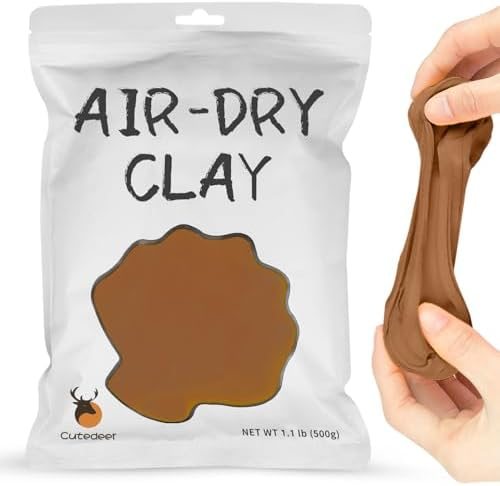
Our clay is the light, foam-textured kind rather than the heavy traditional earthen sort. Pinch a piece and it gives immediately; roll it and it does not crumble at the edges.
The squishy texture is the part children notice first and the part adults underestimate. It means a four-year-old can shape something recognizable without an adult pressing down for them, and that single fact decides whether the experience is a happy one.
It dries in open air, which is the whole point. A thin shape is firm within a few hours and fully dry overnight; a solid fist-sized lump wants a full day or two, and the inside remains soft long after the outside looks finished.
Nothing goes in an oven and nothing needs a kiln. Dried pieces stay light, so they can be glued to a card or hung on a string without tearing it, which is a significant difference from traditional pottery clay.
The trade is honest to state: air dry clay will not hold fine, load-bearing detail. Thin legs sag while they set, and a very large piece can crack as the outside shrinks faster than the core.
We say so on the individual cards, because a family that knows this up front builds thicker and appreciates the result more.
Choosing a single color, a tub or a creative kit
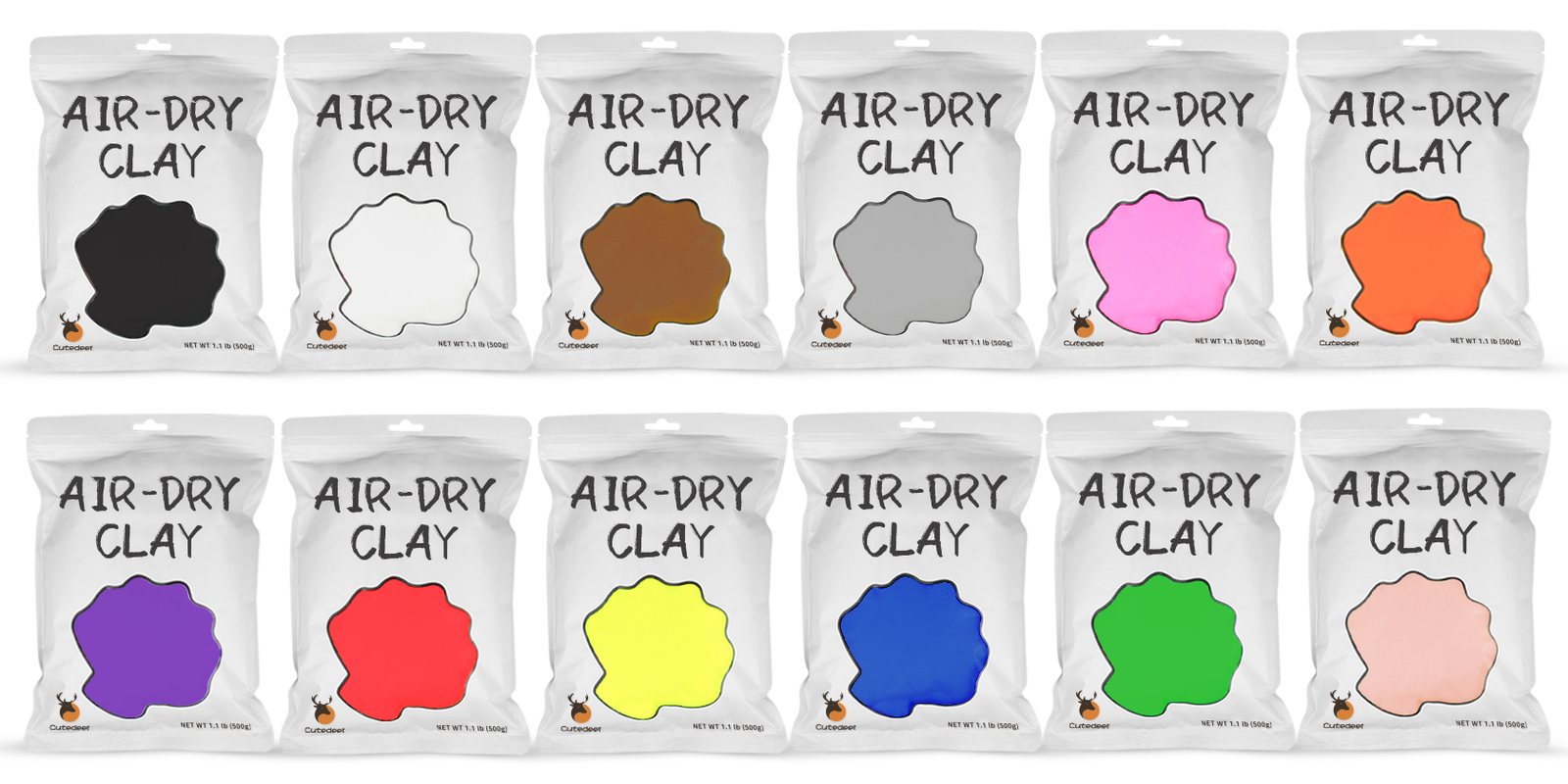
If a child already has a picture in their head, single colors win. One shade, one bag, enough of it to finish the thing without rationing, and no time lost choosing.
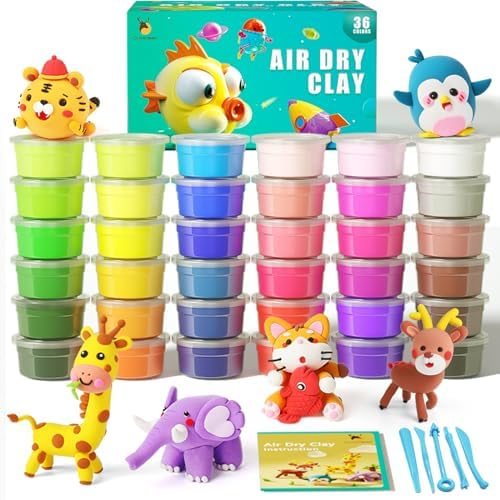
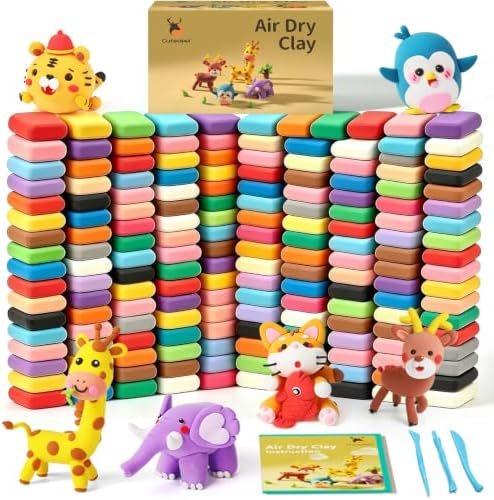
If the plan is simply to make a mess and see what happens, a colorful kit is kinder. The color variety carries the session when inspiration runs out at minute twenty, and the tools come ready in the box, which removes the frustration of cutting a shape with a fingernail.
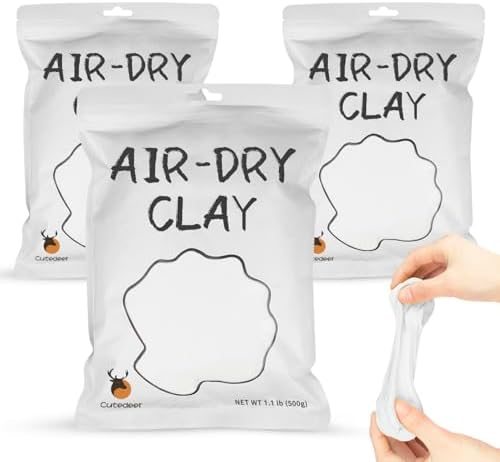
White in bulk is the quiet favorite of anyone who paints. It takes acrylic beautifully once dry, it mixes with a drop of paint while still wet to give a custom shade, and three pounds of it covers a school project with room left over.
We keep white in its own tub precisely because it gets used at a different rate from the colors. Brown empties next, then green; there is no blue on this shelf yet, and we would rather say that than list a shade we cannot ship.
Size, height and the space a build needs
Size is the question we are asked most and the one photos answer worst. A bag of clay is about a pound: in the hand it is the size of a large apple, which is more than most projects need.
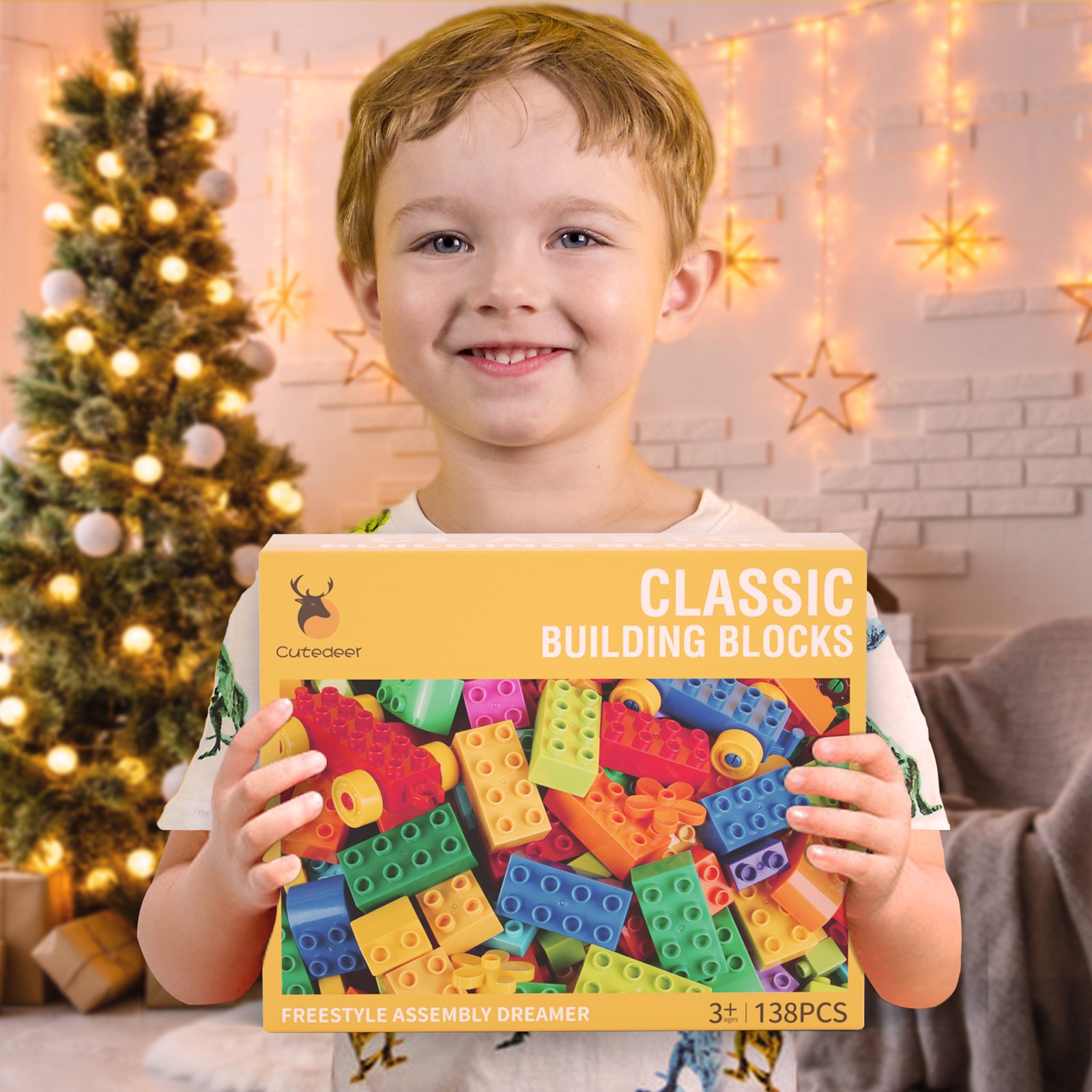
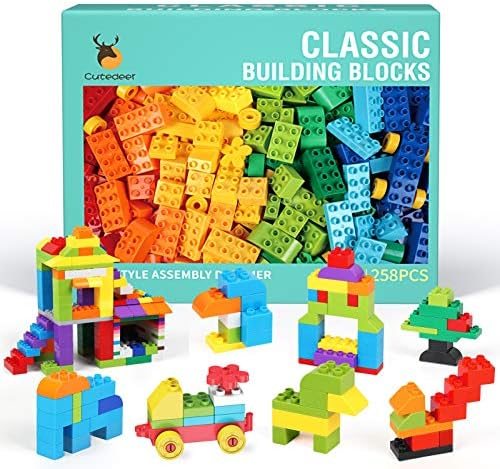
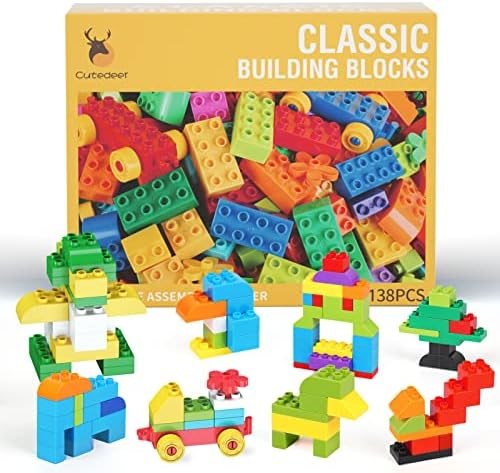
Blocks work the other way around. A box of 138 pieces builds a tower to roughly a toddler's chest height; 258 pieces will clear the height of a kitchen table with pieces left over for a garage.
Think about floor space before piece count. A big-brick build wants a clear square of carpet, and a clay session wants a wipeable surface with a lip; neither needs much space once the lid goes back on.
Every card on this site lists the weight, the piece count and the box size, because those three numbers decide whether a toy suits the room it is going to live in.
Blocks, the brick standard and the care they ask for
The blocks are molded plastic in the oversized standard the major brands use, so they clutch onto the big bricks most households already own. An existing collection grows instead of competing with the new box.
Color is molded in rather than printed on, so nothing wears off. They wash in warm water, they survive being stood on, and they remain usable long after the printed gift box has fallen apart.
Care is simple. Keep them out of a hot car, where any plastic warps, and let them dry fully before the lid goes back on. We would not mention it if we had not seen a bin of blocks go cloudy.
Collections build up fast, and that is part of the appeal. Two boxes and a few connections to an older set, and a household is suddenly building structures at the scale of a doll's house.
Clay as a gift, and for friends of a different age
A kit makes a better gift than a single color, because it arrives looking like a present and because you do not have to guess where a child's interests are pointing this month.
For a birthday where you barely know the recipient, the 36-color kit is the safe choice. For a friend of the family who already sculpts, a tub of white and a set of acrylics is the gift that gets used.
A younger sibling changes the calculation. Under three we would introduce blocks first, and letting clay wait a year costs nothing: a younger child enjoys the same impulse with none of the drying time and nothing small enough to swallow.
Please read the age guidance on each card rather than the number on the box. It is the one place where we are deliberately more cautious about what is suitable than the manufacturer is, and families tell us they appreciate it.
What the photos show, and what sitting down with it tells you
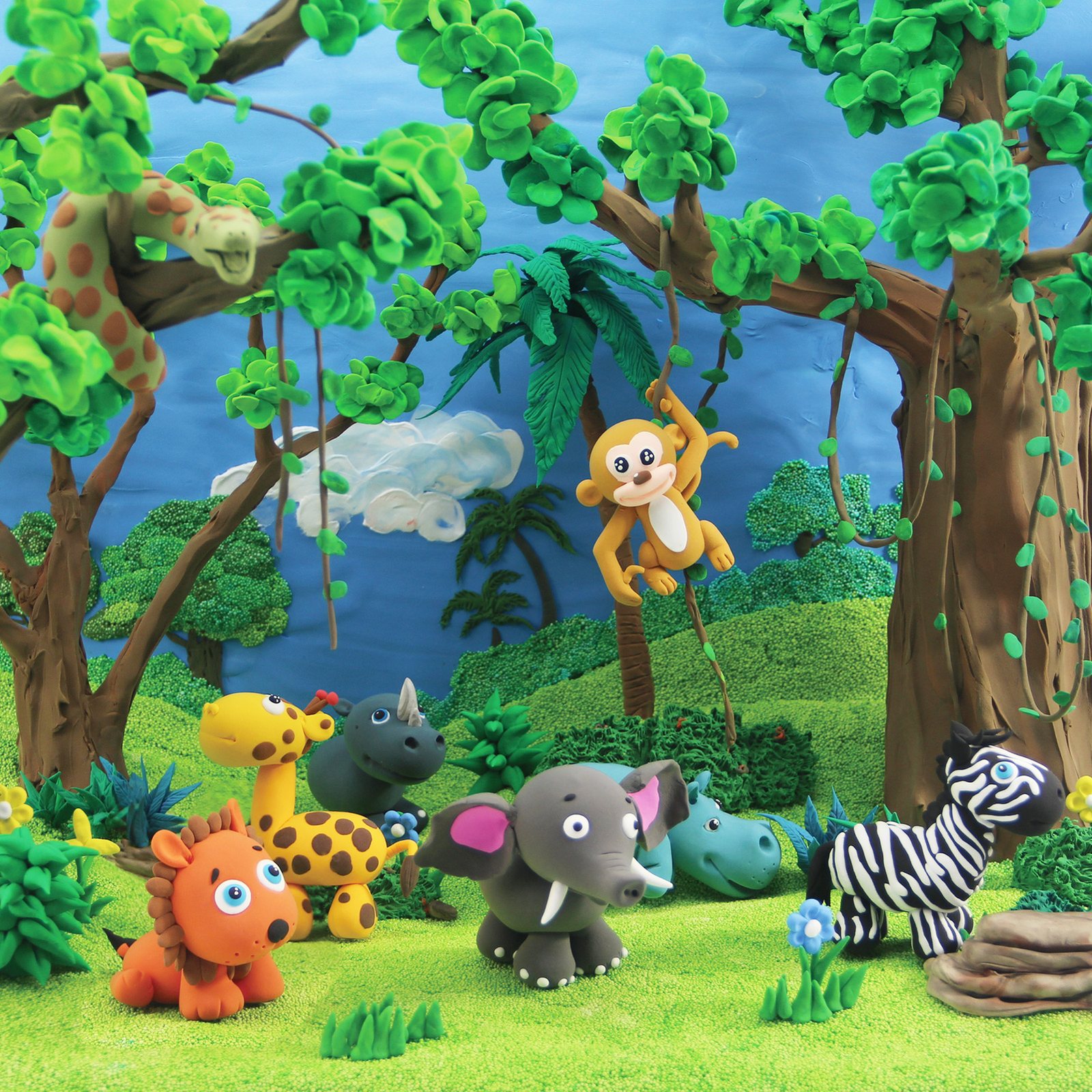
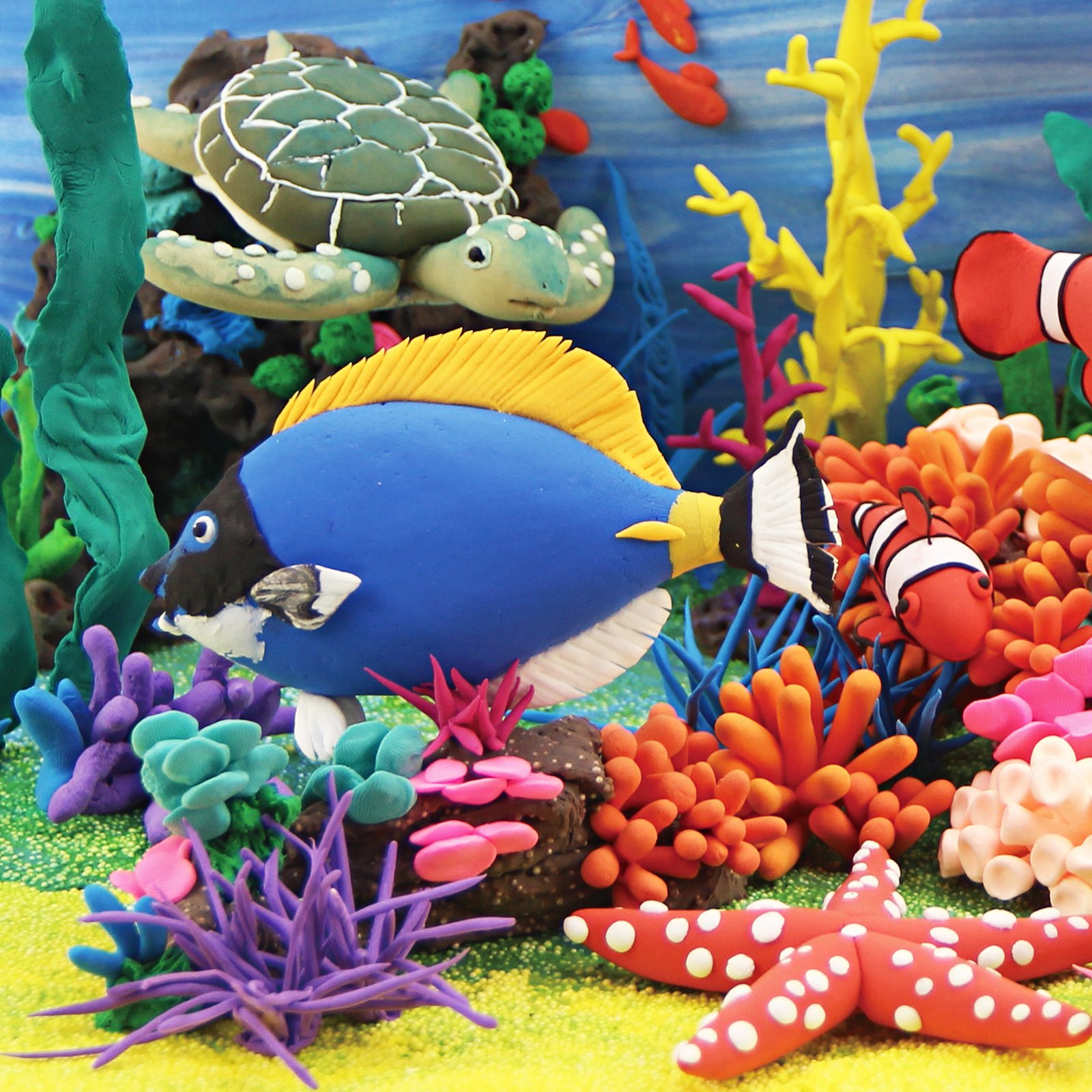
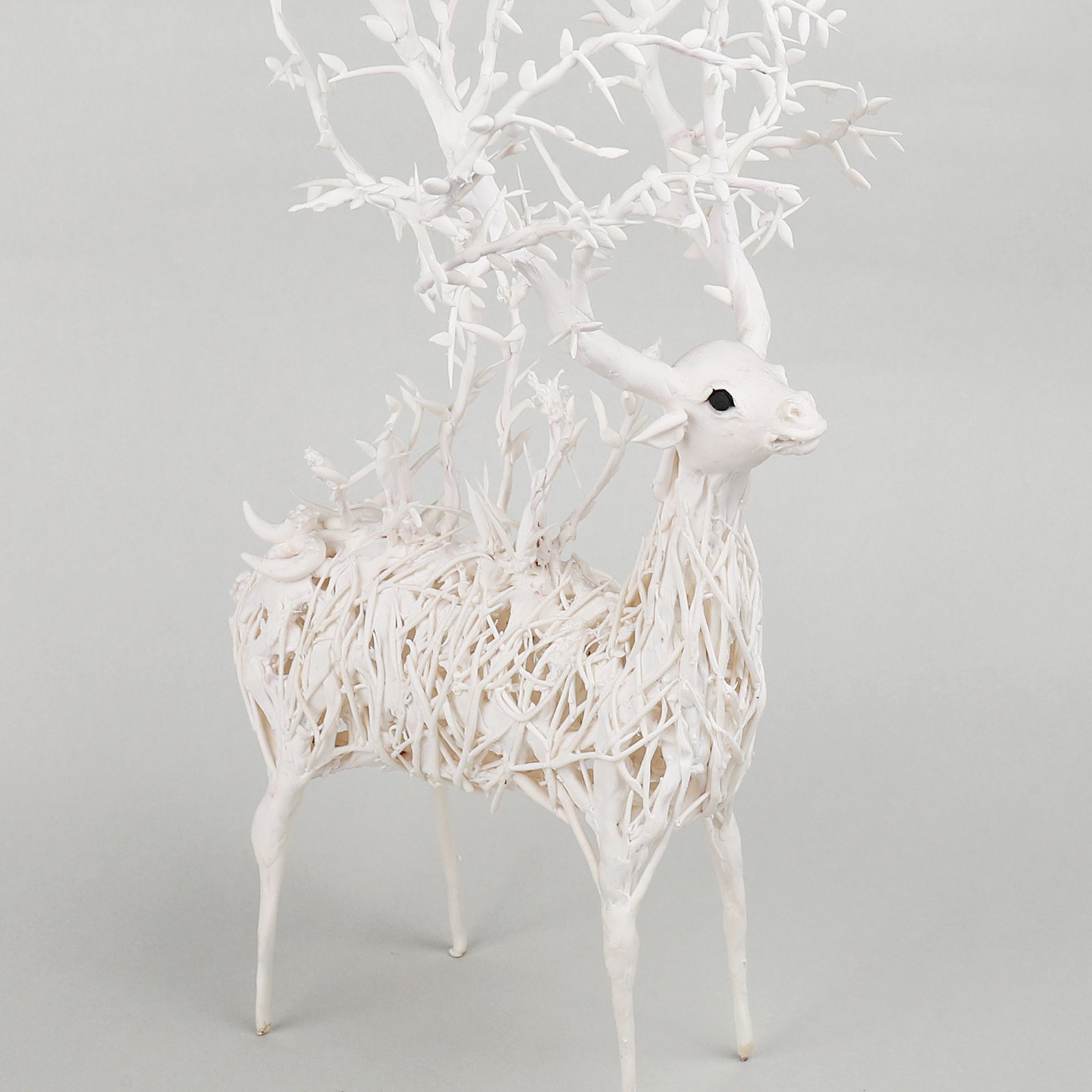
Every photo on this site is of the thing itself, and we additionally shoot a few dioramas so you can see what the material does in use rather than in a box.
What photos cannot show is the give. A piece of our clay is flexible under a thumb in a way no image conveys, and that flexible, naturally light feel is the whole reason a child keeps going. It is also why clay is the material behind stop-motion animation, and why a few families end up filming theirs.
So we write instead. Sitting with a material for a week produces answers a product page cannot: how long a session lasts, what gets created on day three, which colors run out first. That is experience rather than specification.
Those notes are increasingly the part of the site people write to us about, which tells us the writing is worth the hours. Artistic expression is a grand phrase for a table covered in clay crumbs, but it is what is happening.
Keeping this site clear, current and accessible
Prices and stock come from the live listing and are re-checked on a schedule, not typed once and forgotten. If a figure here disagrees with the listing, the listing is the one that charges you.
When something sells out we take the card down rather than leave a dead link, which is why the count on each shelf changes through the year. The range continues to move, and the site is rebuilt to match it.
We keep a short page on accessibility, because a site about toys for small children gets read by grandparents on phones. Large type, real contrast, no moving banners: it continues to be the easiest promise we make.
Questions that do not have an answer here are welcome by email. We focus on the two things we know well, the clay and the blocks, and we would rather give one clear answer about those than a vague one about everything.