

Field note
Air dry clay for kids: what the first week actually looks like
What air dry clay for kids is really like in the first week: seven days with a five-year-old, written down honestly, so you know what to expect before the bag is open.
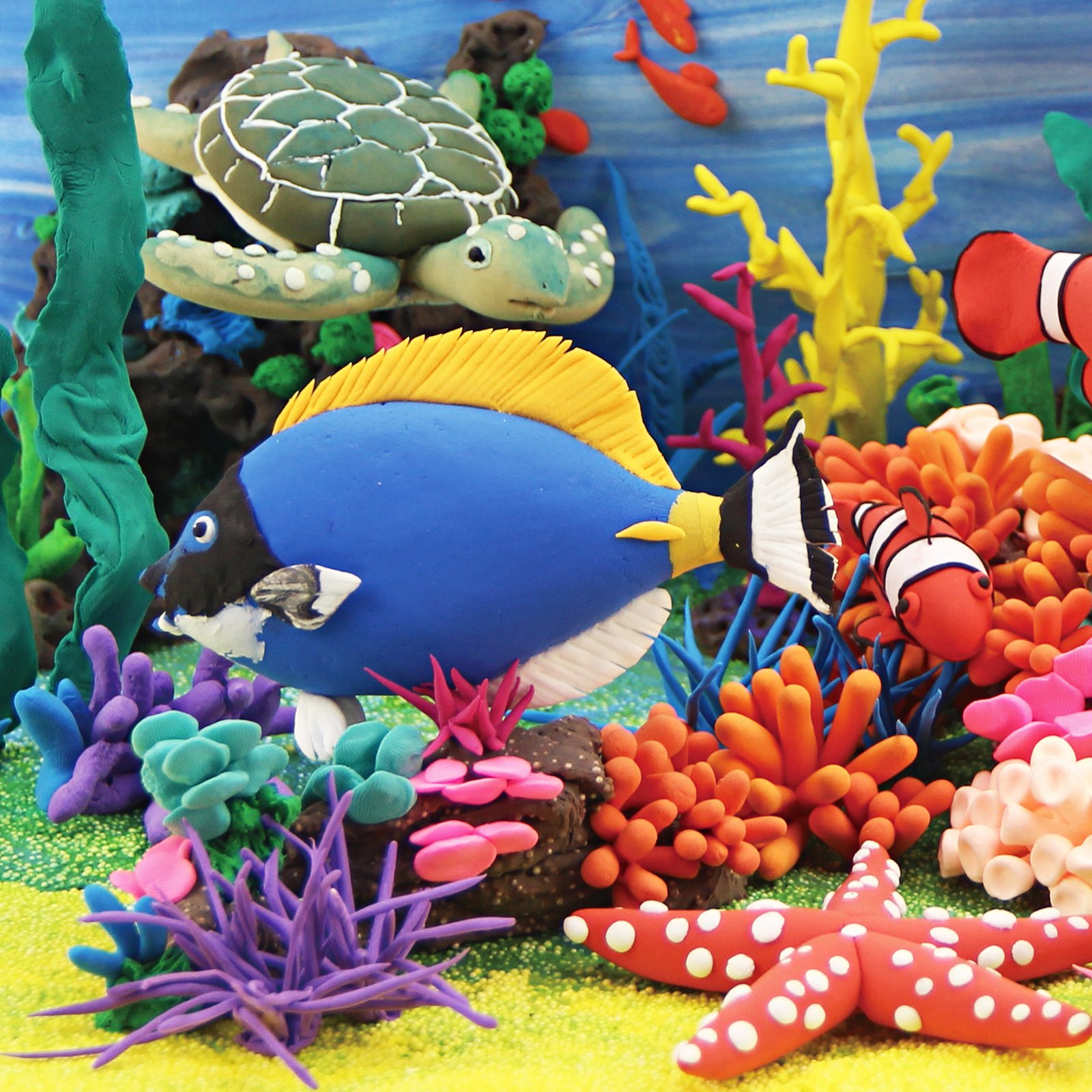
Air dry clay for kids: what day one actually looks like
Hand a child a fresh piece of air dry clay and nothing gets made for the first twenty minutes. It gets squeezed. That squishy texture is doing real work: it tells small hands how much pressure a material will take, and that lesson does not transfer from reusable dough, which gives way far too easily.
Let it happen. Children love the squeezing, nothing is being wasted, and clay that has been handled and put back in the bag is still fresh clay.
If you want a shape out of day one, pick something flat. A leaf, a coin, a little pancake with a stamped pattern. Flat things dry fast and they dry without sagging, so the child sees a finished object the next morning and learns that the material keeps its promises.
Day one is also when you find out that air dry clay for kids is a tidier activity than it looks. There are no crumbs until a piece is dry, nothing goes in the oven, and the whole session packs away into one container.
The middle of the week is where size becomes the lesson
By day three the ambition grows and the first solid lump appears, usually a head. This is where families meet the one real limit of air dry clay.
A fist-sized ball dries from the outside in, so the surface hardens while the core stays soft, and as the outer shell shrinks it can crack. Hollow the thick parts, or mold them out of smaller pieces pressed together, and the problem mostly disappears.
Air dry clay takes hours rather than minutes: a thin shape is firm in three or four hours, a solid one wants a day or two. Nobody has to watch it, which is why we call it a patient material.
This is also the week for adding a tool. A blunt plastic point for eyes, a roller for slabs, a simple cutter for repeated shapes. The kits come with these for a reason; before they appear, every detail is made with a fingernail and the results frustrate the child far more than they frustrate you.
Ideas that work in a first week of air dry clay
Animals first, always. A snail, a turtle, a fat bird: each one is a ball plus two details, and the child gets a recognizable result in five minutes. Dinosaurs come next, and they are where a set of colors earns its keep.
Then flat projects, because they dry overnight and can be decorated the day after. A flower on a card, a name plate for a bedroom door, beads for jewelry, an ornament with a hole pushed through while the clay is still soft.
By day four most kids want to make something for somebody else. A small gift for a friend, a magnet for a grandparent, a bowl for keys by the front door. That is the point where crafting stops being an exercise and becomes a reason to create.
Birthday parties work too, as long as you plan one simple shape and plenty of table. A dozen children sculpting is fun, loud and surprisingly quick; markers and paint come out the following week, once everything has set.
The ideas are endless, and the possibilities are most of why we write these notes instead of printing a leaflet. Look at what the child keeps returning to, then buy the color that runs out.
Tools, containers and keeping the clay fresh
Air dry clay for kids lives or dies by storage. Press the air out of the bag and seal it, or wrap the piece in cling film and drop it into a lidded container; a kit with its own compartments does that job on its own.
If a lump has gone firm but not hard, a few drops of water kneaded through will usually bring it back. Mix the water into your palms rather than onto the clay and the result stays even.
Keep the unused shades cool and out of the sun. A cupboard is fine; an open windowsill in July is how a bag turns into a paperweight.
Tools need no care beyond a rinse. The instructions in the box say what each shaper is for, and after a week nobody reads them again, which is the sign of a good set.
By the weekend you will want paint and somewhere to put things
Dry clay takes acrylic well, and painting is a second session out of the same lump, which is good value for a wet Sunday. White gives the cleanest color, so anyone who intends to paint should keep a tub of it rather than buying colored clay and covering it up.
Bright colors on white read true; on a tinted shade they go muddy. Two thin coats beat one thick one, and a sealer at the end makes a piece suitable for a desk at school rather than a shelf at home.
You will also need that shelf. Nothing kills the habit faster than a week of finished creations swept into a drawer. We put a narrow board at child height and let it fill; by the end of a month there is a small population up there, and the child walks past the evidence that the material works.
What air dry clay for kids is really teaching, and what we would buy again
A week in, the skills are visible. Hands that could only squash can now roll, pinch and join. That is fine motor practice no app delivers, and it arrives disguised as fun.
The rest is imagination with somewhere to go. A child who has made one animal starts designing the next before the first is dry, and creativity of that kind is easier to start than to stop. Artists have always worked this way, from classic modeling clay to the foam sort we sell.
What we would buy again, in order: a colorful kit if there is no habit yet, because the variety carries the first fortnight and the tools remove the early frustration. A tub of white once painting starts. Single colors last, when a project needs one specific shade and nothing else will do.
If the child is under four, start with big blocks instead and come back to clay in a year. Big bricks reward the same impulse with none of the drying, and nothing in those boxes is small enough to worry about.
And expect the habit to change shape. By the second month the clay is less about animals and more about whatever is going on at school, which is the experience we hoped for when we started writing this down.
What to take away
- Expect twenty minutes of squeezing before anything gets made
- Flat shapes dry overnight; a solid fist-sized piece wants a day or two
- Hollow out the thick parts so the outside does not crack as it shrinks
- Animals, flat pendants and beads are the ideas that survive week one
- White plus acrylic beats buying every color, if painting is the plan
Keep reading
The other notes
Keeping clay soft between sessions, and reviving it when it is not
Storage is the whole difference between a material that lasts a season and one that lasts a weekend.
Read the note →Painting and finishing dried clay without ruining it
What actually sticks, what lifts off, and why white clay is the quiet workhorse of the whole range.
Read the note →Clay or blocks: choosing a gift when you do not know the child well
A short decision tree for aunts, uncles and anyone buying for a birthday party next Saturday.
Read the note →Need the clay this note is about?
Every shade and kit we keep, with the price confirmed on each card.
