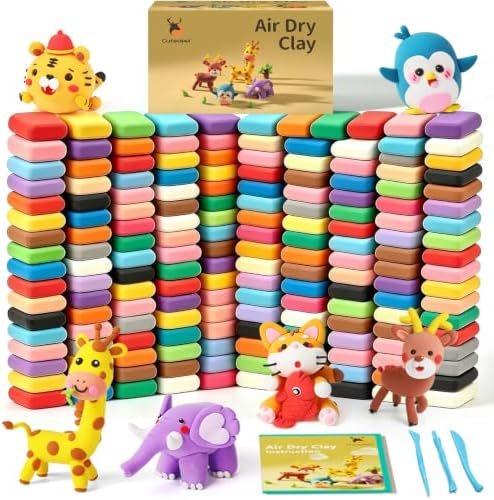
Cutedeer air dry clay in the bigger formats
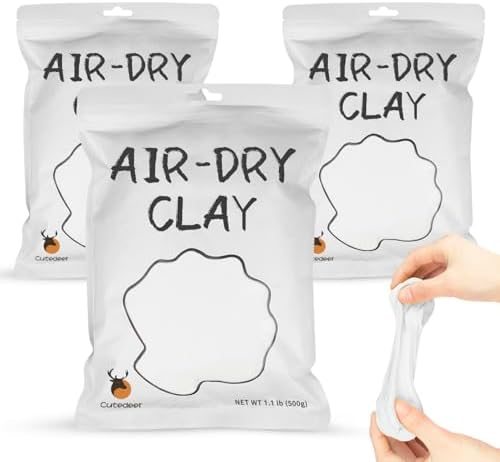
This shelf is Cutedeer air dry clay in the formats you reach for when one bag is not the answer: a three-pound tub of white, and two boxed kits that arrive with tools.
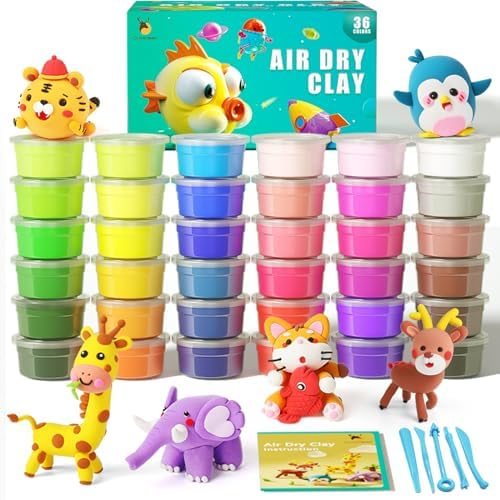
A kit is a choice already made. It comes with the tools in the photograph, a spread of shades, and enough of each to find out what a child actually likes before you commit to buying one specific color by the pound.
For a first purchase, or a gift where you do not know the recipient well, that is the right shape of risk. Nothing about it needs an instruction manual beyond the booklet that comes in the box.
Our 36-color kit is the small version of that idea and the one most families start with: a manageable spread, a few sculpting tools, and a box that closes properly.
The 150-color kit is the same idea at the scale of a classroom or a long school holiday, where the shade count is the point rather than the weight of any one color.
The white tub sits at the other end. It is 3.3 lb of one neutral shade, the format to buy when painting is the plan, when a diorama needs a lot of one material, or when a household has decided it likes this clay and simply wants more of it.
Air dry clay, the tools and the first session
Everything on this shelf is air dry clay. It firms in open air over a night or two and needs no baking, which is what makes it an accessible material for a child who cannot be left alone near an oven.
The tools that come with the kits are the small, blunt sort: a roller, a few shapers, a cutting edge. They matter more than they look like they should, because they let a child cut a clear edge that fingers cannot.
Each kit also carries a short instruction booklet with a first project to copy. It uses the shades already in the tray rather than ones you have to buy, which is a small courtesy that we notice and appreciate.
A first session goes better with a flat working surface the clay will not stick to and a plan small enough to finish. We write that up properly in our field notes, with what the first week actually looks like rather than what the box promises.
Open kits keep well if the unused shades go back into their own compartments and the lid goes on firmly. Clay that has gone stiff on the shelf can usually be brought back with a few drops of water and a minute of kneading, which is cheaper than replacing it.
Which format serves which situation
One child, first time, no idea whether the interest will last: the 36-color kit. The variety does the motivating, and the activity survives the first dull twenty minutes.
One child who has already filled a shelf with small models, or a group of them: the 150-color kit, because running out of one specific shade is the thing that ends a project early. In a classroom it serves a whole table without anybody sharing a color.
A planned build that will be painted at the end: the white tub, every time. It serves the purpose another household might use three colors for, and acrylic on white reads truer than paint over a tinted shade.
Kits and tubs are also how collections start. One kit teaches a child which colors their own interests keep returning to, and the single shades on the next shelf top those collections up for years afterwards.
Prices on this shelf move more than on the single colors, so each card carries the figure we last confirmed against the live listing. If a kit is missing from this page it is because we could not confirm it was in stock, not because we stopped liking it.