Big blocks, and why the size is the whole point
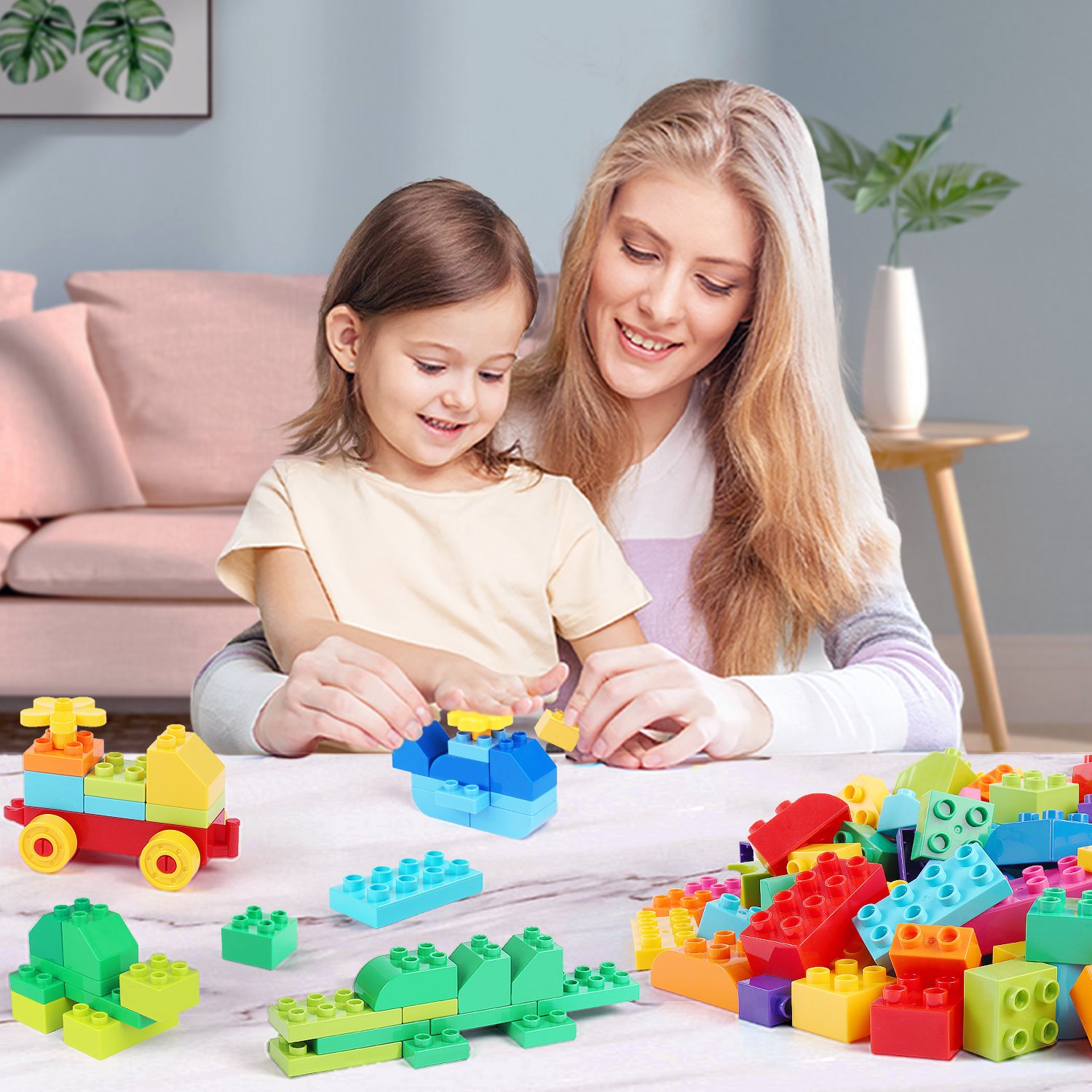
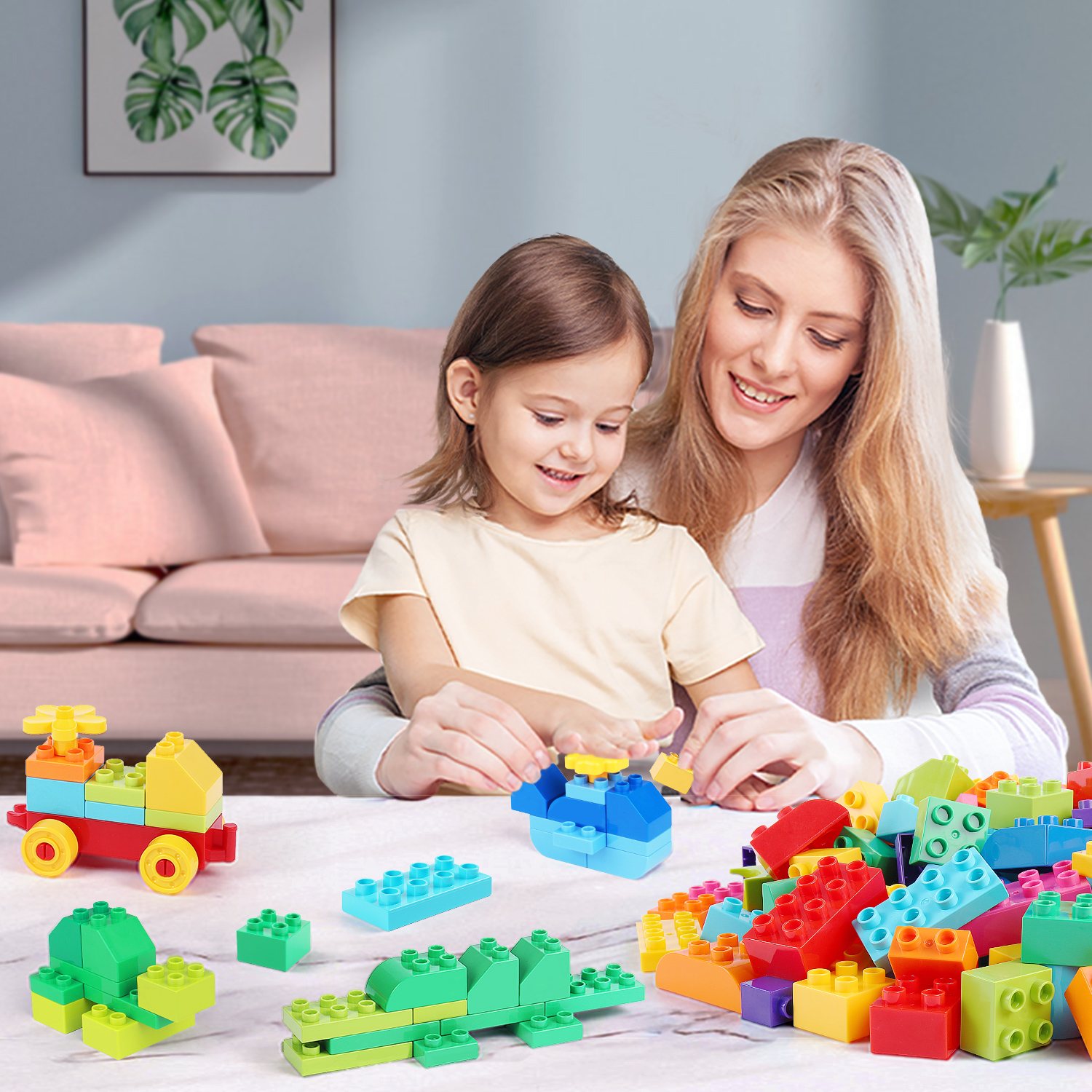
These are the chunky bricks, the ones a toddler can pick up in one hand and press together without an adult finishing the job. The scale is doing the work: a large brick is easier to grip, far harder to lose in a rug, and not a choking risk in the way a small brick is for the age that still puts things in its mouth.
Both sets we keep join onto the big-brick systems most households already own, which matters more than any single box. A new set that joins the existing pile doubles what can be built; a set that fits nothing becomes its own small island and gets played with half as often.
Color is molded in rather than printed on, so nothing wears off, and the pieces take the kind of handling a three-year-old considers normal. There is no clay on this shelf and no drying time: a build happens now, gets knocked over, and happens again.
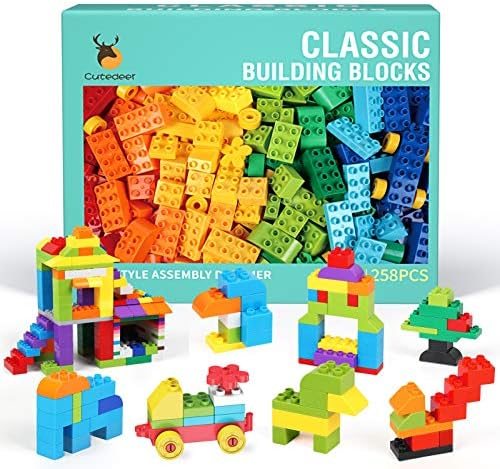
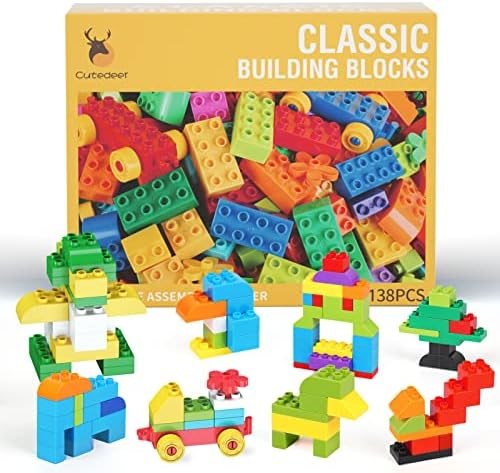
138 pieces or 258 pieces
The honest answer is that piece count is a rough guide and the shape mix matters more. The 138 piece box is a complete starting pile: enough for towers, walls, a simple house and a garage, and small enough to tidy into one container. The 258 piece box is what you buy when two children build together, or when one child has outgrown the first box and keeps running out of long pieces halfway up a wall.
If a household already owns a big-brick set, the larger box is usually the better buy, because the limiting factor is almost never the number of small cubes. If this is the first set in the house, start with the smaller one and see whether building becomes a habit before buying the pile that needs its own shelf.
Blocks next to clay
We keep blocks and air dry clay on one site because children move between them without being told to. A block garage wants a car small enough to park in it and the blocks have nothing that size; a pinch of clay answers that in a minute. A clay animal wants somewhere to live, and a wall of bricks is up before the clay has dried.
If you are choosing between the two as a gift and have no way to ask, our field note on that decision lays out what each one asks of the child and of the adult nearby.