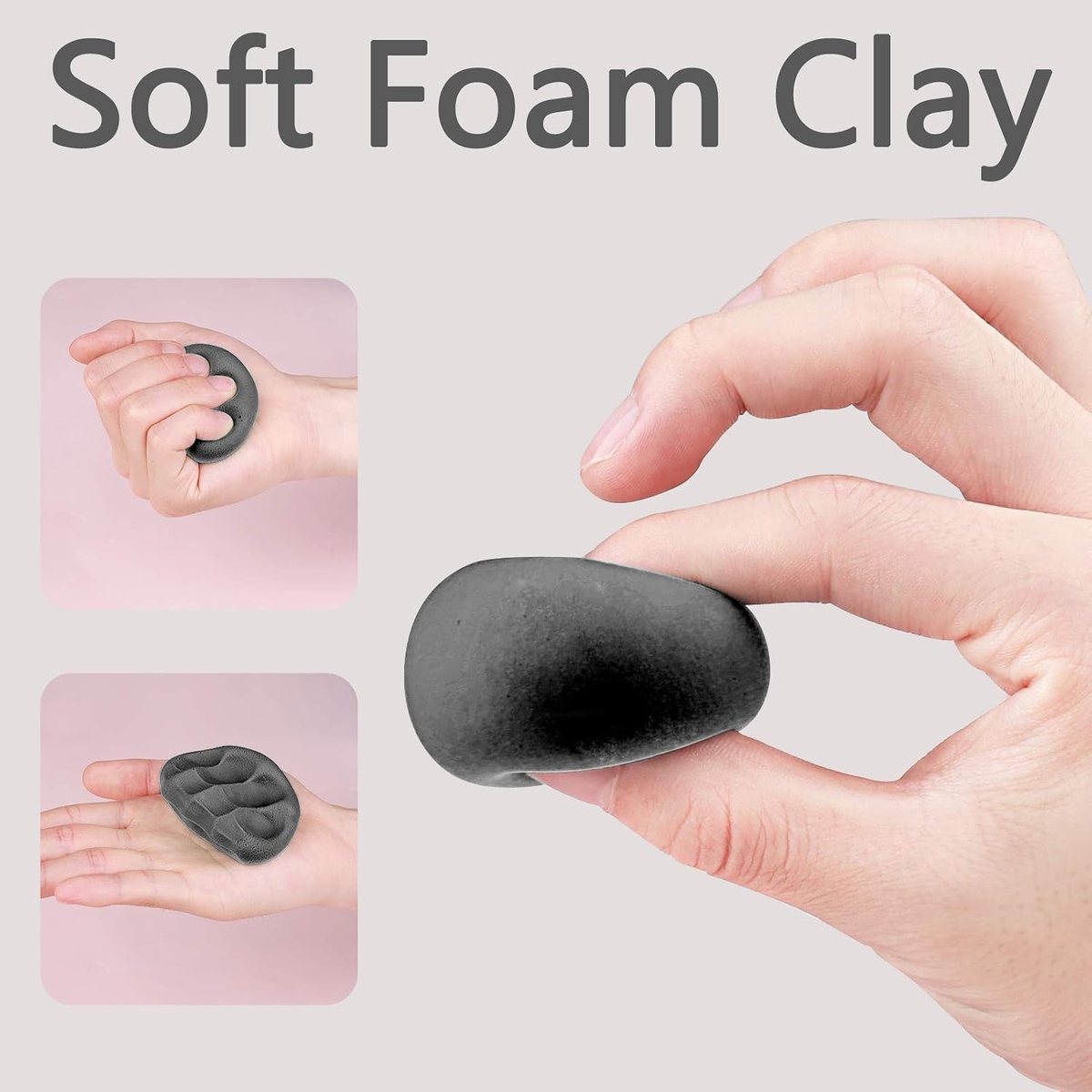
Bought by the pound, used by the pinch
Black is the color families consume in the smallest amounts and run out of fastest. A set of eyes takes a piece the size of a pea; a zebra's stripes take a little more; a whole black object is rare. What makes a pound of it worth having is that every other project quietly needs some, and the alternative is cannibalising a multi-color kit until it has a hole in it.
It is also the shade that does the most work as an ingredient. A pinch kneaded into brown gives bark, into green gives the deep shadow under leaves, into red gives something much closer to a real apple. Keep the amounts small, because black takes over fast.
Detail without a tool, and with one
Rolled between a finger and thumb this clay makes a clean sphere small enough for an eye, and it sticks to a dry surface with light pressure alone. For anything finer, a blunt point does more than a fingernail; the kits in our tubs and kits shelf arrive with the right shapes if there are none in the house.
One honest warning that applies to black more than to pale shades: it marks pale clay and it marks hands. Work the black last in a session, or wash between colors, and nothing goes gray.
Drying and finishing
Small black details dry within a few hours because they are small, which is convenient when they are the last thing added to an otherwise finished piece. The dry surface is matt rather than glossy; a brush-on gloss sealer makes an eye look wet and alive, which is a disproportionately good trick for the effort.